Pixels of the Week – August 30, 2026
Why design systems fail without people, building a product knowledge base and a fun LinkedIn cringebot.
Pixels of the Week is my weekly-ish curated newsletter for designers, UX folks, devs, and anyone building accessible, inclusive, usable (and let’s be honest, awesome) digital products. This week covers why design systems need people, not just docs, and how spec-driven design can help document research insights. Also don’t miss a fun cringe LinkedIn bullshit post creator, and an interface cheat sheet.
Subscribe to my newsletter to get this directly in your mailbox!
Most popular content this week
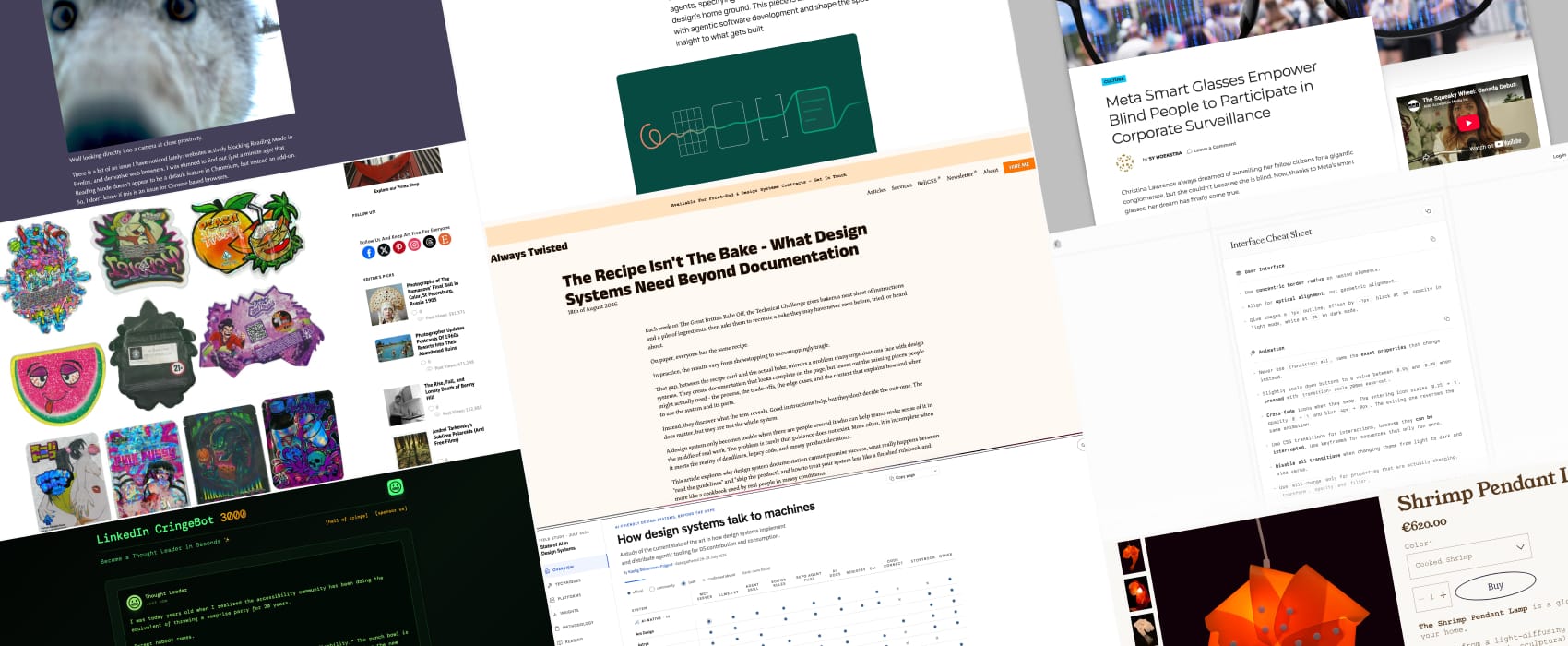
The Recipe Isn’t The Bake – What Design Systems Need Beyond Documentation (15min) Design system don’t fail because of weak documentation, they fail from missing people context and support. I like the recipe metaphor here: give the same recipe to multiple people, and you might end up with different results, depending on their skills, but also deadlines. So, yup, to make a design system successful, we need a lot of human interactions, from coaching to conversations, and feedback loops with the teams who will use it. By Stuart Robson
Articles
Spec-driven design: Designing for agentic software development (15min) I really like Tuomas Härkönen’s idea of building a “Product knowledge base”, combined with some “Living feature specs” so that we stop losing precious information, including user research and design decisions. Design’s value becomes knowing what users need, judging what is worth building and that has to come from someone who has spent real time with real users. It also frees hours from re-explaining things, giving us more time for actual co-creation.
Meta Smart Glasses Empower Blind People to Participate in Corporate Surveillance “Christina Lawrence always dreamed of surveilling her fellow citizens for a gigantic conglomerate, but she couldn’t because she is blind. Now, thanks to Meta’s smart glasses, her dream has finally come true.” Highly satirical article, of course. The irony that Meta launched a social media platform (thread) without alt text for images (they fixed it since but, only after people complained), and is now trying to push those glasses as assistive technology isn’t lost on many of us.
Accessibility Rant: Reader Mode (7min) I am confused, why would someone disable reader support on purpose? Anyway: I agree here, please, don’t disable reader mode, it’s super important for a lot of users.
Accessibility workshop in September!
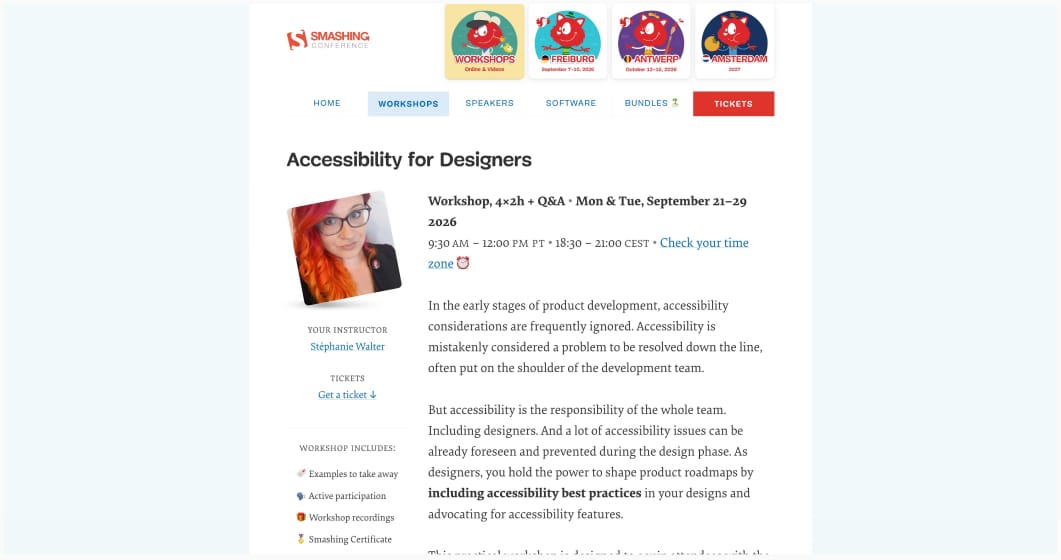
I’m running my Accessibility for Designers in September. It’s a 4 × 2h live workshop to help you design more inclusive products, with many practical exercises.
It’s from Sept 21 to 29, Mondays & Tuesdays, 18:30 – 21:00 CET / 9:30 AM – 12:00 PM PT.
Included: video recordings, slides, Figma exercise & annotation template, accessibility checklists and a LinkedIn certificate.
Curiosity cabinet
A Collection of Vintage New York City Drug Dealer Bags and I have to admit that the design of some of those is fabulous.
Inspiration
Shrimp Pendant Lamp. Best tagline ever: It’s a shrimp on your ceiling. Yes, your guests will have questions. That’s the point. Do you prefer the cooked or the raw version?
Interesting websites
LinkedIn CringeBot 3000 a fun satirical tool that lets you turn any topic into a cringe full LinkedIn post. I have to admit, I tried feeding it “Accessibility and the lack of interest in people on the topic” + “hot take”, and the result was, quite fun to read. (and no I would never post that)
Interfaces Cheat Sheet a list of very high level tips to help you improve your interfaces. I’m not usually a big fan of do/don’t, but it’s still interesting to have some “rules”. The trick: know the role, apply it, become a better designer, and then, know when it’s okay to break it as well.
State of AI in Design Systems: A study of the current state of the art in how design systems implement and distribute agentic tooling for DS contribution and consumption.
